1. Confirm scope
Agree the collection sites, asset types, capture requirements and the records needed for the project.
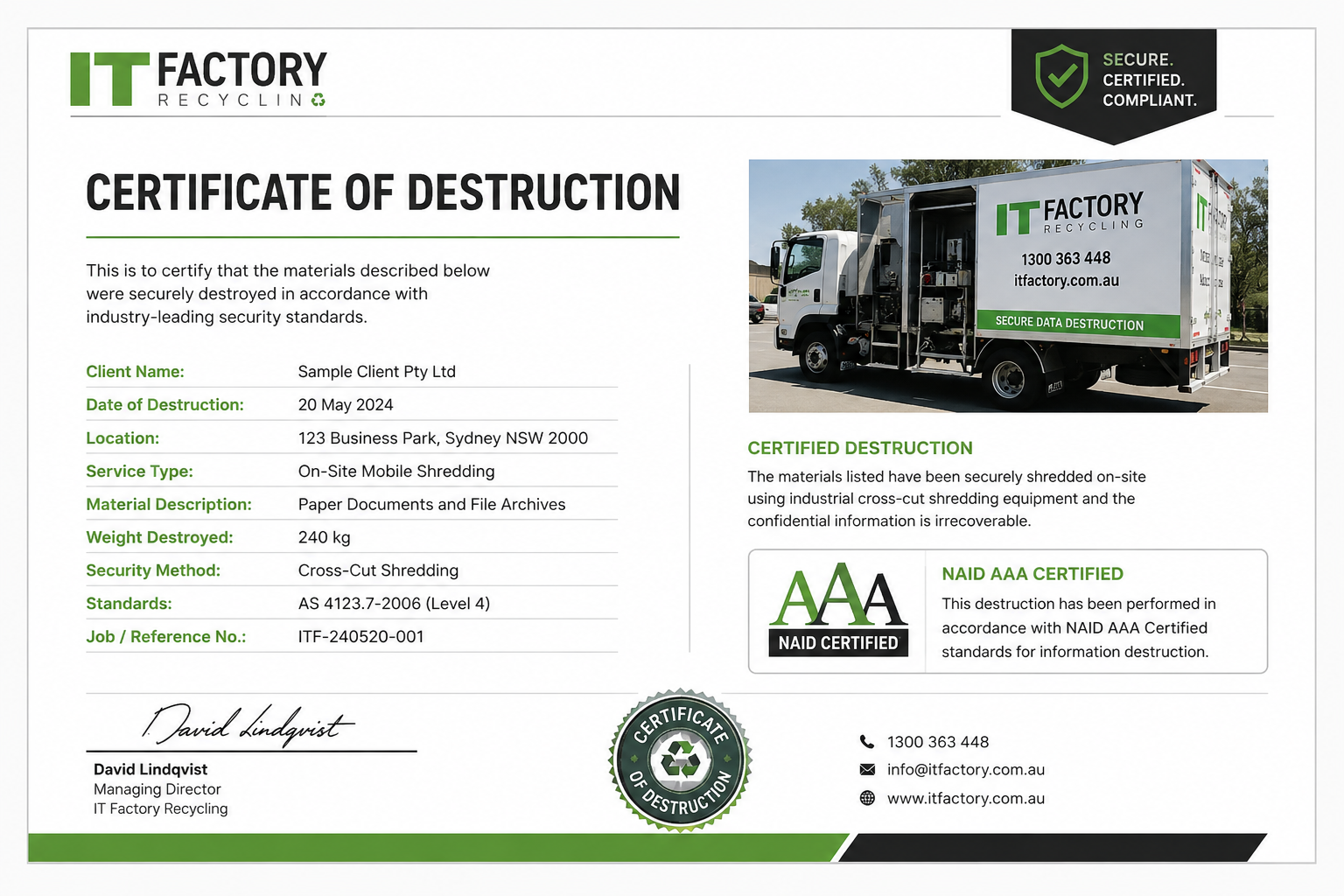
We collect approved data-bearing ICT equipment, transport it to a controlled processing facility, confirm what has been received and destroy the agreed media. You receive a certificate of destruction and supporting records showing what was collected, processed and any exceptions.
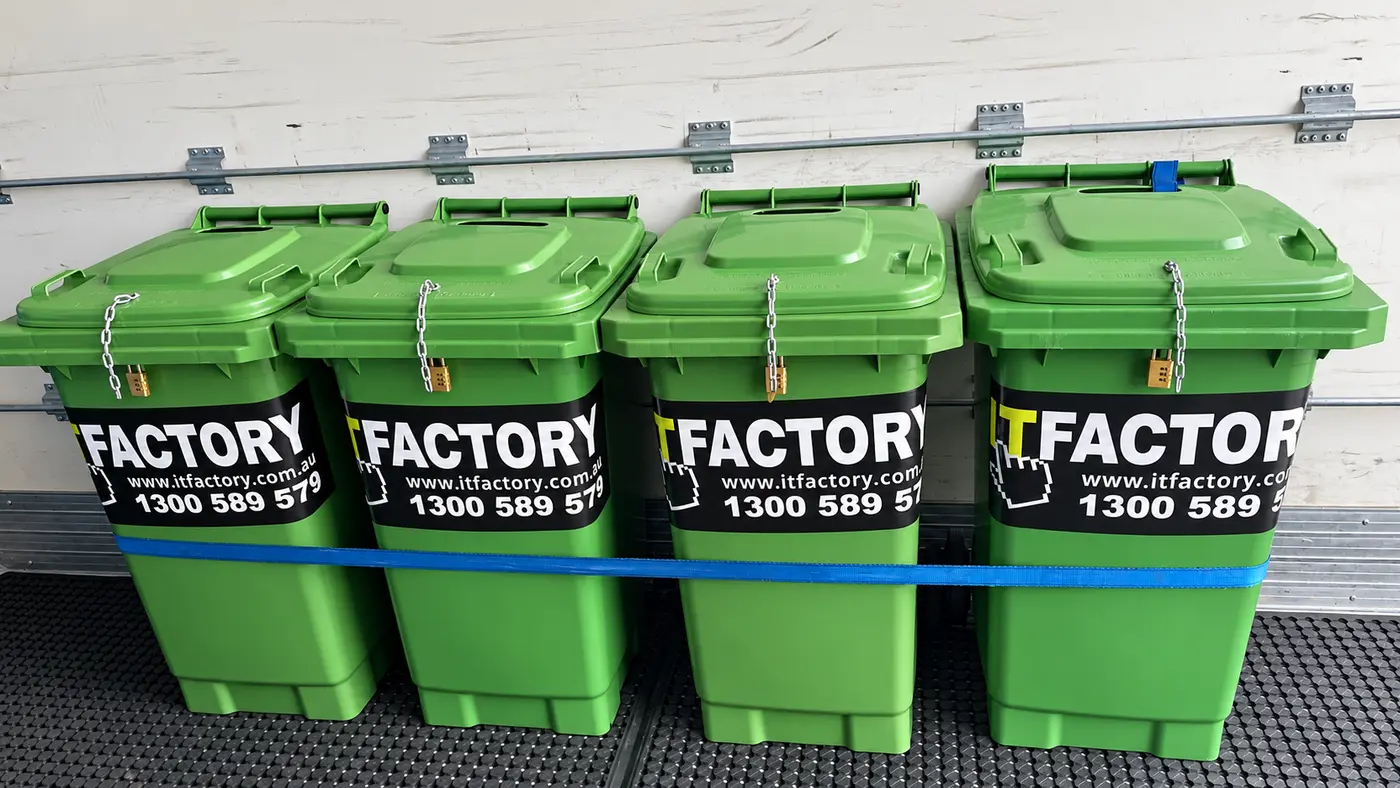
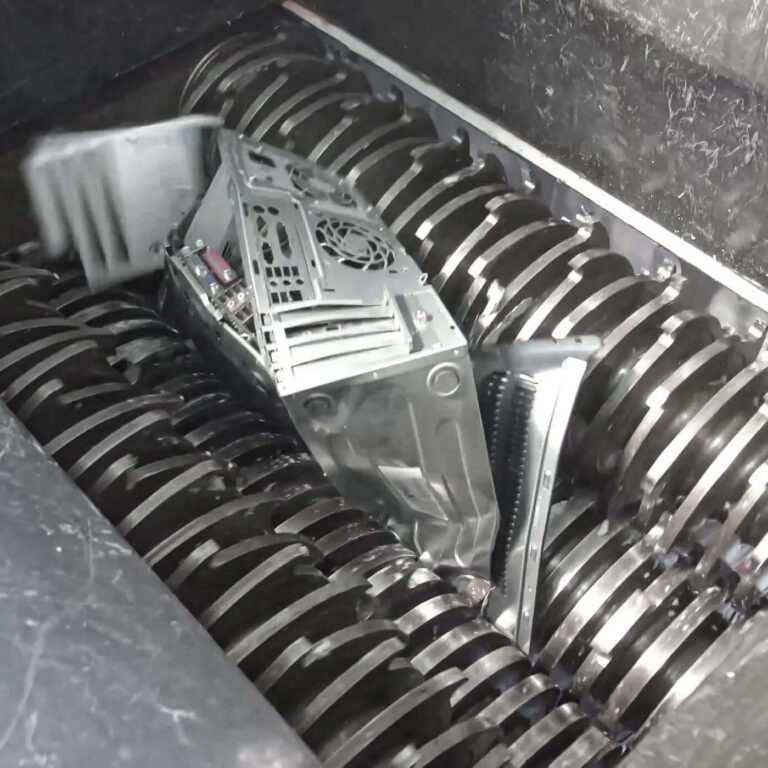
Off-site destruction is often the practical alternative when the main job is to clear approved ICT assets quickly, keep site disruption low and still receive clear destruction records. It works well when devices are already staged for pickup, when collections need to happen across multiple sites or when your team does not need a mobile shred truck on location.
Agree the collection sites, asset types, capture requirements and the records needed for the project.
Approved data-bearing ICT equipment is collected and transferred to the processing facility under documented handover.
The incoming batch is checked against the agreed scope and the approved media is physically destroyed.
You receive the certificate of destruction plus the project records showing what was received, processed and any exceptions.
HDDs from desktops, laptops, servers and storage equipment.
SSDs and other flash-based storage requiring physical destruction.
Data-bearing media from enterprise servers, arrays and storage hardware.
Backup tapes, optical media and other archived storage formats.
Portable storage devices that may contain business or personal information.
Other approved data-bearing ICT media requiring secure destruction.
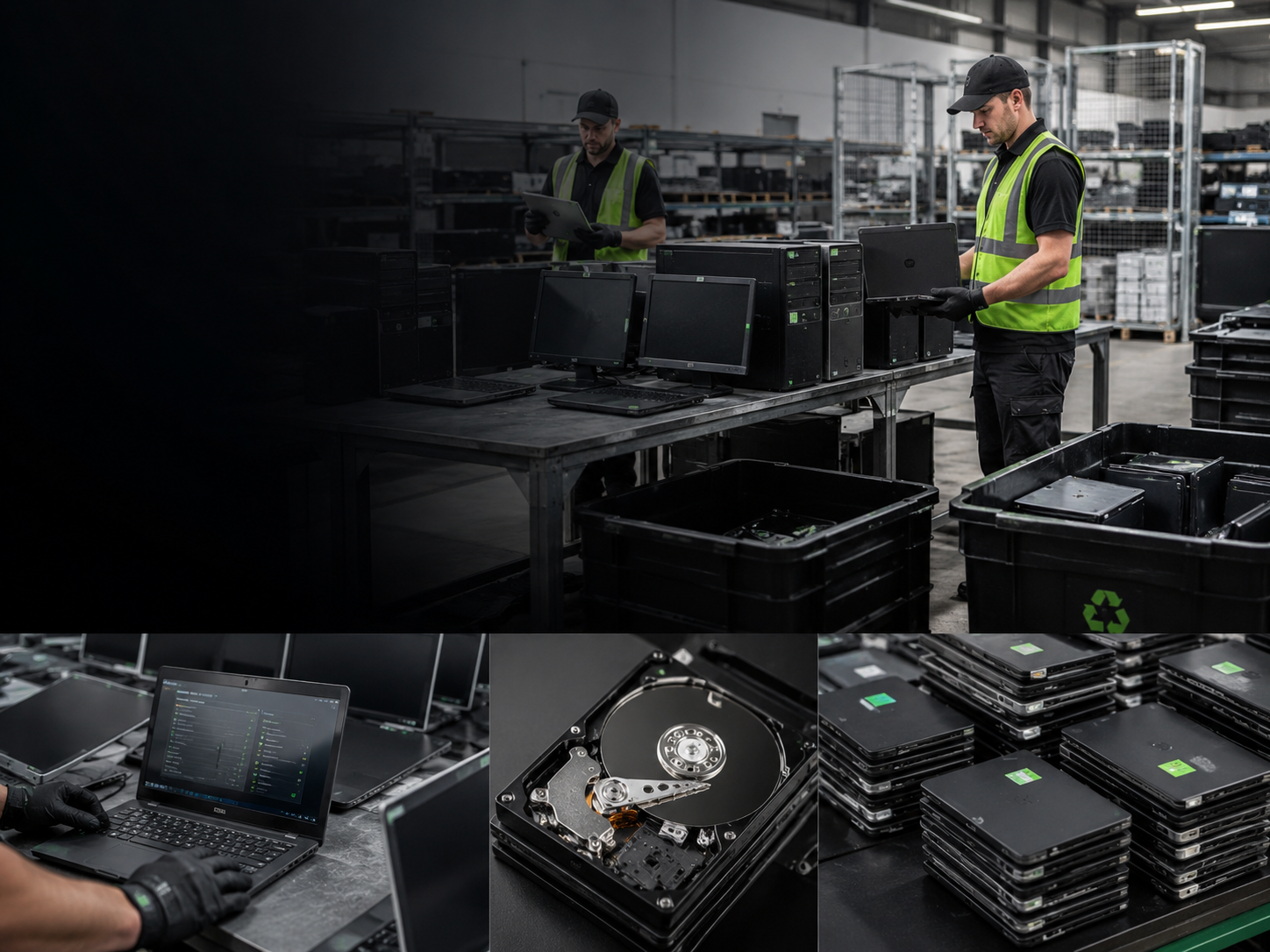
Some retired ICT assets may still hold residual value. Send us your inventory for a private assessment before deciding what should be sold, recycled or destroyed.
On-site destruction is the better fit where policy, audit requirements or data sensitivity mean custody should remain with your organisation until physical destruction is completed.
Review on-site destruction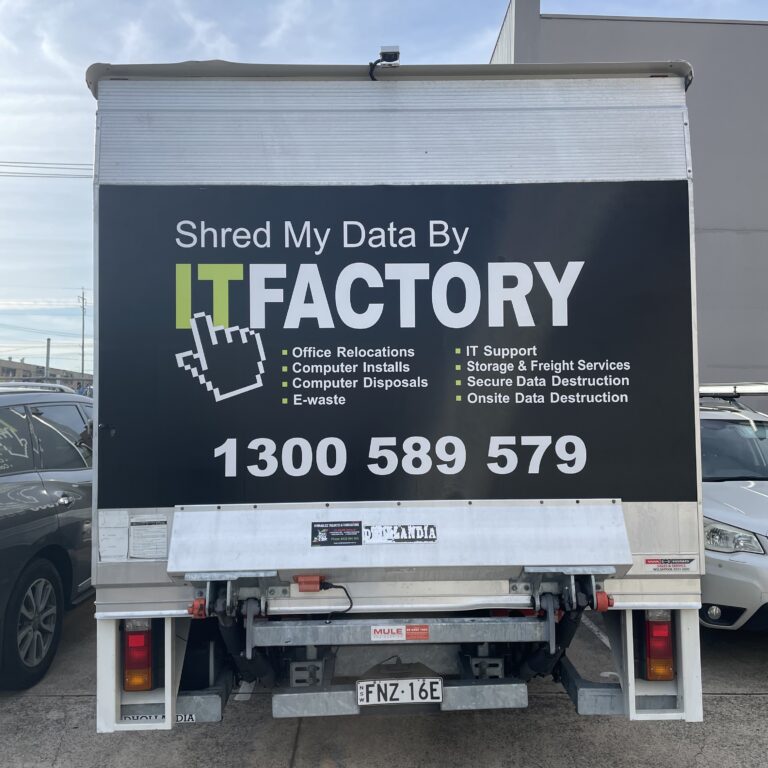
A certificate of destruction can be supported by device serial numbers, custody records, a comparison against the original device list and any recorded exceptions.
Tell us what equipment you have, where it is located and what outcome you need. We will recommend the most suitable destruction or asset-recovery service.